Understand How a Story Develops
A guide to building a composition in stages.
A composition should not feel like a random list of events. Each stage should move the story forward.
Parent Note
When reading your child’s composition, check whether each part connects to the next. A common problem is a story that jumps from setup straight to resolution with nothing in between. Ask: what was the turning point? Where did something change? That is where most marks are won or lost.
Stage 1: Setup
Introduce the situation, character and mood. The reader should know what is happening and what may become important.
Stage 2: Incident
Something happens that creates a problem, challenge or opportunity. This must connect to the theme.
Stage 3: Development
Show actions, feelings and decisions. This is where the character responds to the problem.
Stage 4: Turning Point
A key moment changes the direction of the story. The character may realise something, take action or face a consequence.
Stage 5: Resolution
End the story clearly. Show the outcome, reflection or lesson without rushing.
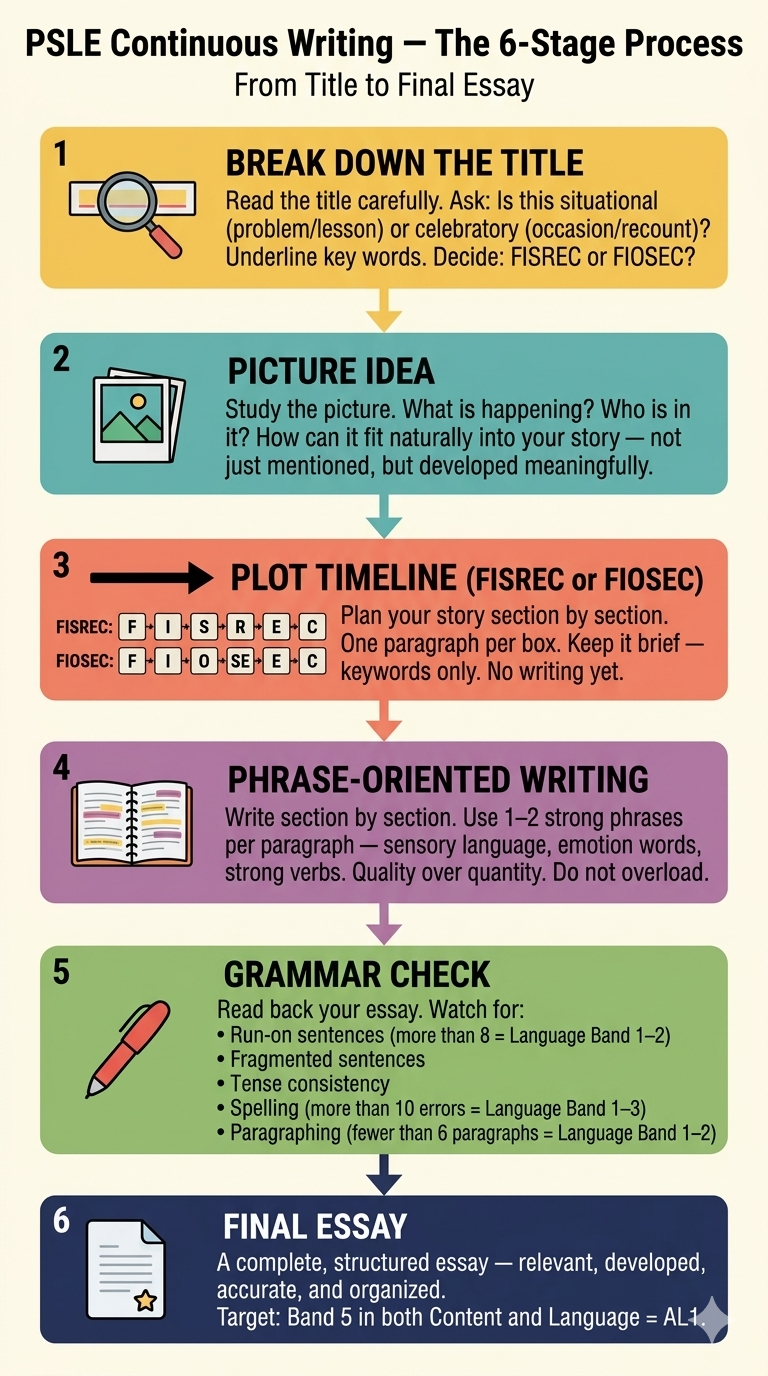 Tap or click the infographic to view it larger.
Student reminder
Student Note
“Every stage must earn its place in the story.”
“A good story moves with purpose.”