What Students Need to Know
A guide to developing oral answers with relevance and depth.
SBC is not about giving one-line answers. Students must respond to the question, use the stimulus, develop ideas and show personal thought.
This page breaks SBC down into five tools — a framework, a storytelling method, a vocabulary bank, an oral success summary and a self-check checklist. Use them together.
Parent Note
When practising SBC at home, resist the urge to correct grammar during the answer. Let your child finish first, then give feedback on development. Ask: did they give an example? Did they explain why? Did they connect to real life? Those elements matter more than perfect grammar in SBC.
Even five minutes of daily conversation about a topic — what they think, why they think it, one example — builds the habit that SBC rewards.
Student Note
“A good oral answer grows. It does not stop at the first sentence.”
“Do not just answer the question. Develop it. Your voice and your thinking are both being assessed.”
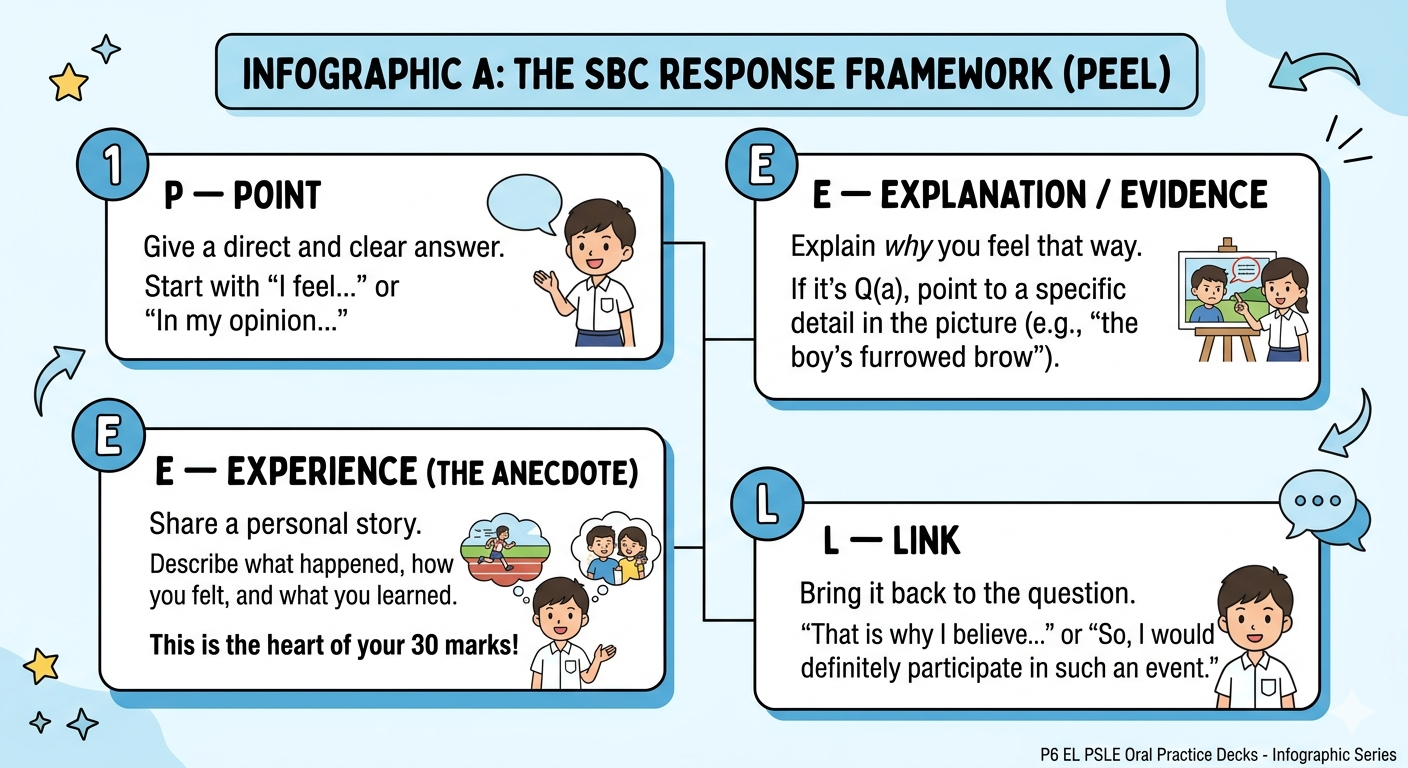
① The SBC Framework
Before jumping into your answer, understand the structure of what a strong SBC response looks like. Refer to the infographic above.
A strong SBC answer has these five moves:
- Answer the question directly — do not begin with memorised lines.
- Use the stimulus meaningfully — refer to the picture only when it supports your answer.
- Develop with a personal or real-world example.
- Explain the significance — connect to people, society or a broader consequence.
- Conclude with a thoughtful point or reflection.
“Structure your answer. Do not just speak — build it.”
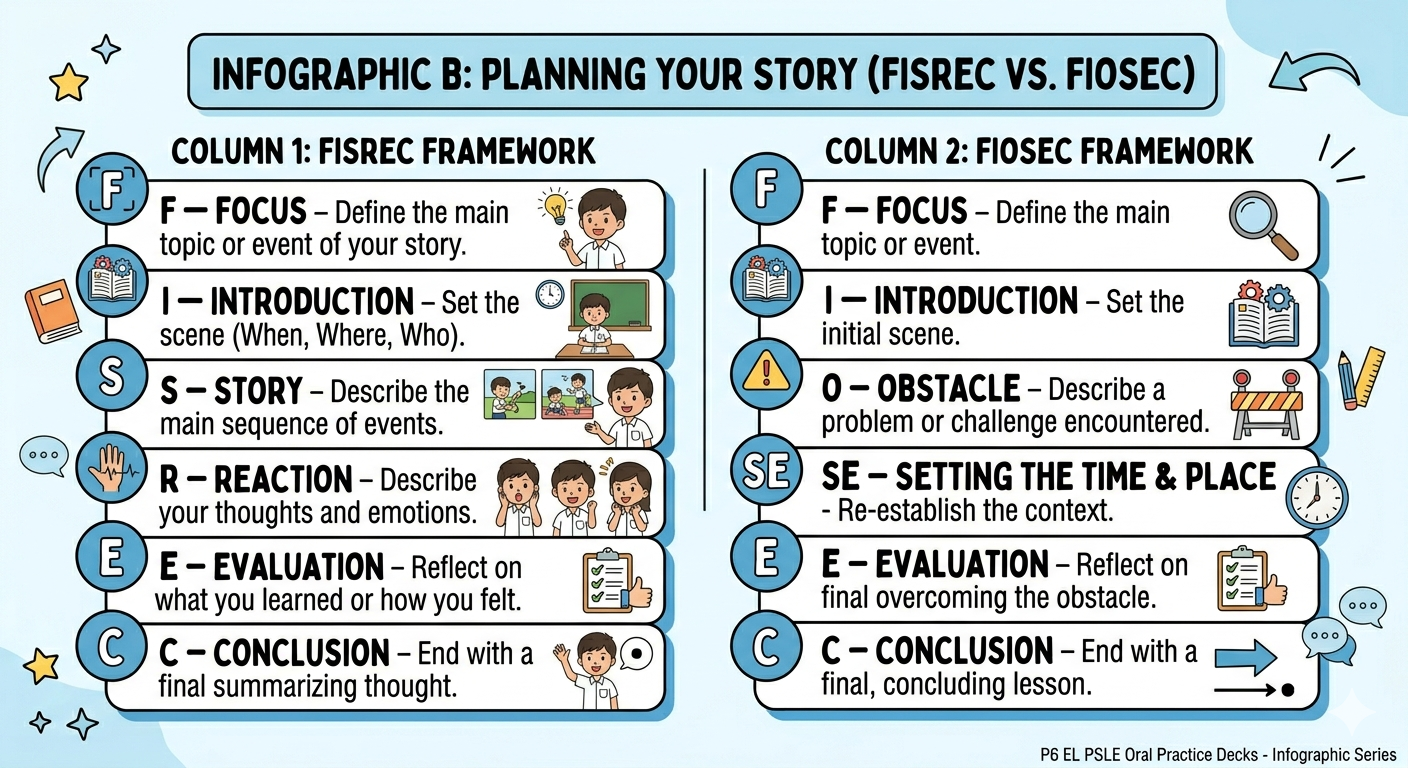
② Telling Your Personal Story
Many students know what to say but do not know how to make it personal and believable. Use the story writing framework above to craft your personal example — just like you would in a composition.
Your personal story in SBC should have:
- A real or realistic situation.
- A clear reason why it happened.
- What you or someone did.
- What changed or what was learnt.
“A real story makes your answer believable. A believable answer gets remembered.”
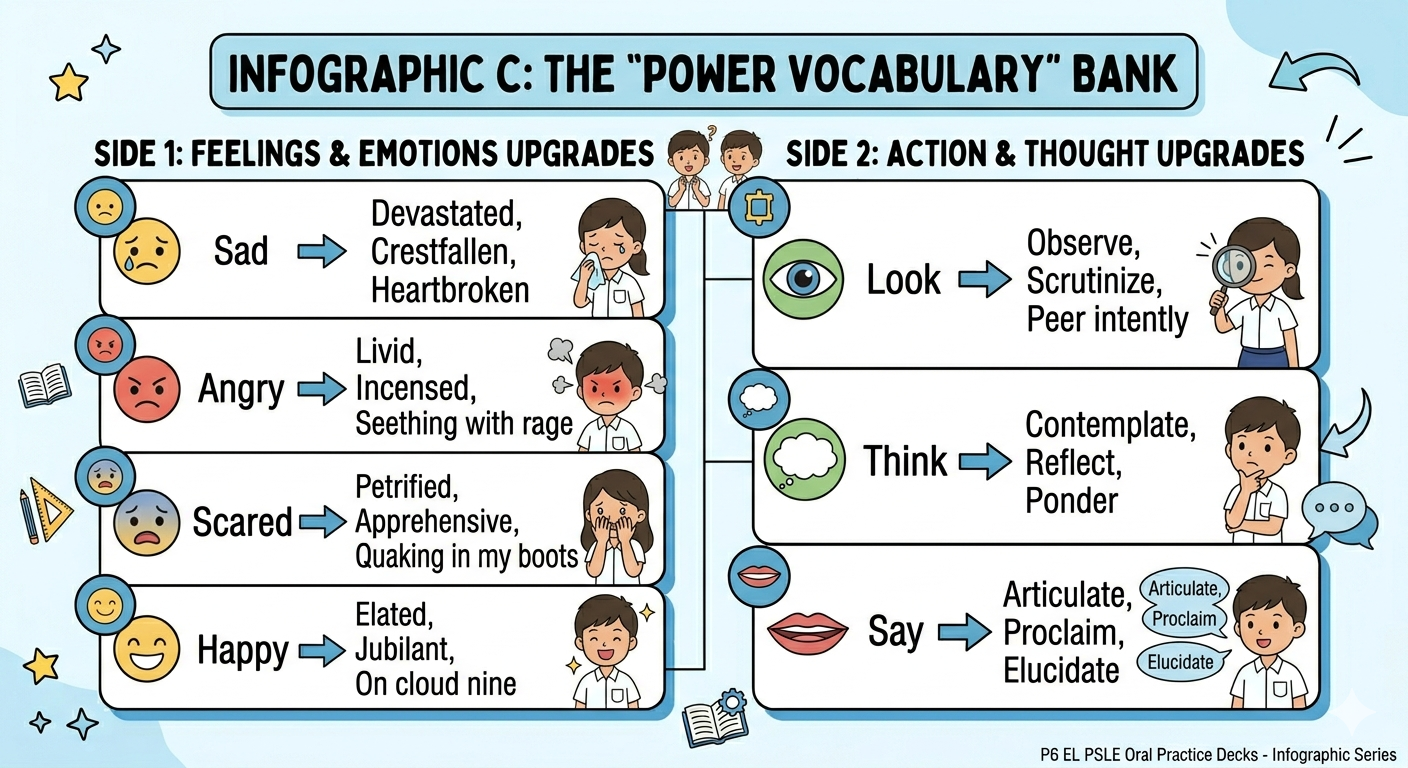
③ Power Vocabulary Bank
Generic answers use weak, predictable words. Strong oral answers use precise vocabulary that shows awareness and maturity. Refer to the infographic above.
Instead of saying ‘good’ or ‘bad’ or ‘I think it is important’ — use words that show you have thought about the issue carefully.
“One precise word is worth three vague ones.”
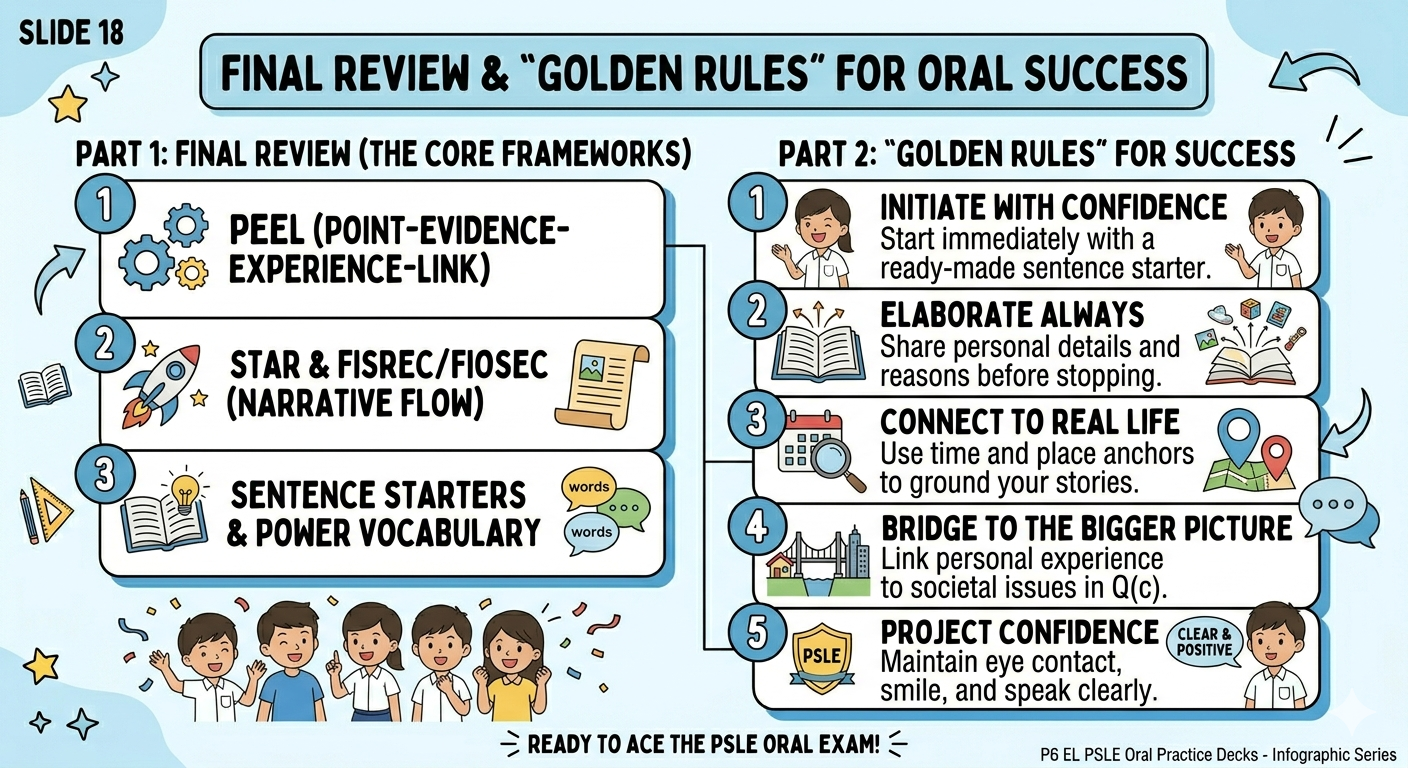
④ Oral Success Summary
Before your oral examination, use the infographic above to remind yourself of what a strong SBC answer requires. It brings together all the key moves in one place — your last check before you walk in.
“Know the moves before you need them. Preparation is what makes confidence feel natural.”
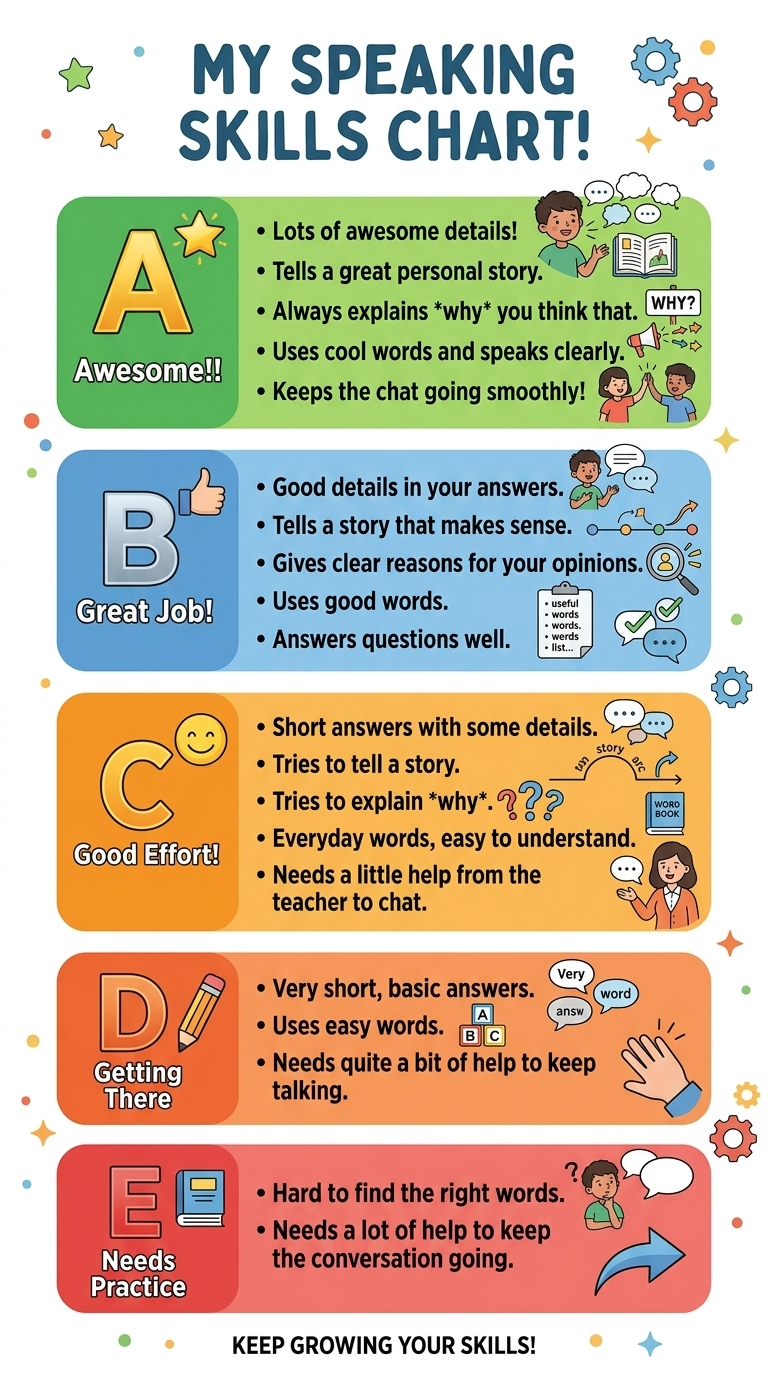
⑤ SBC Self-Check Checklist
The infographic above gives you a quick post-answer check. But checking is only the first step — you also need to know what was missing and how to rebuild it.
The full self-improvement loop — including the PEEIC scaffold and what a Band 5 Insights response actually looks like — is on the next page.
Done a practice answer? Use the Self Learning SBC tool to check your work — step by step, against the actual band descriptors.
“Answer. Explain. Example. Connect. That is how a strong oral answer is built.”